Skip to main content
STAR Voting Legislative Templates
STAR Voting Legislative Templates
STAR Voting is legal and constitutional in all 50 states and STAR Voting has been widely proposed and considered for adoption by city councils, charter commissions, state legislatures, political parties, and many more. The legislation linked below has gone though the official vetting and review required of a ballot initiative and it's the perfect starting place for new legislation.
If your chapter is looking to use this legislation as a starting place to draft your own proposal, please contact [email protected].
With each campaign submitted we learn more about how to draft legislation that is clear, effective, and politically viable and we use that to improve on our next wave of proposals.
 |
|
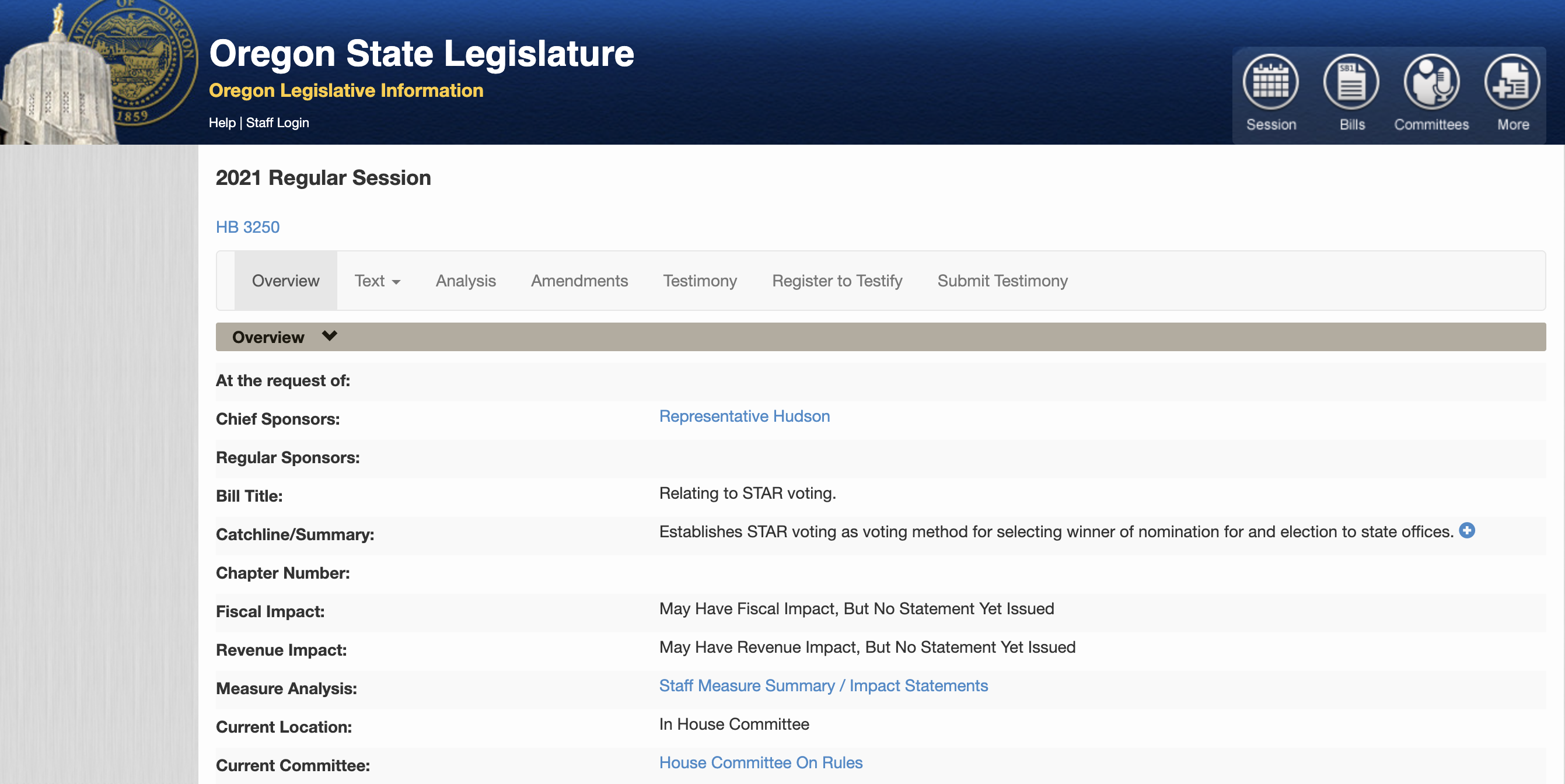
Oregon House Bill 3250 (2021)
- Establishes STAR as the default voting method for State elections.
- Implements single-winner STAR for elections that are currently single-winner and Bloc STAR for elections that are currently multi-winner.
- Respects local innovation by grandfathering in other alternative voting methods which have been recently adopted at the local level. Allows for future upgrades or innovations including proportional representation if desired.
- Eliminates unnecessary primaries. As the default, nonpartisan elections would not have primary elections unless the jurisdiction determined that they wanted to do so. For jurisdictions that do want primaries, the top five candidates would advance to the general election.
- For elections to partisan offices, STAR would be used for all partisan primaries, and general elections. In the event that under six candidates file to run for office all five would automatically advance to the general election.
|
 |
|
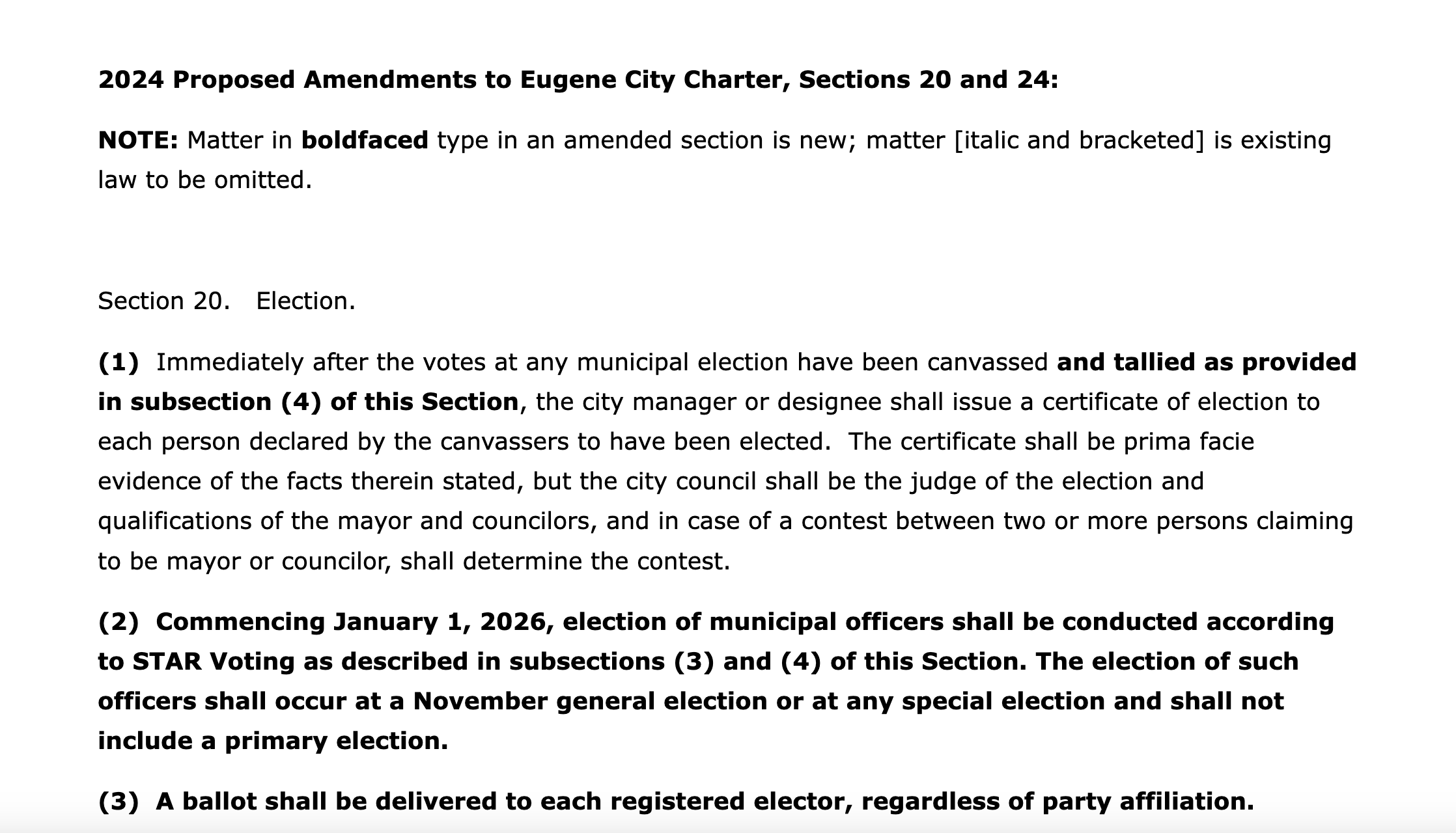
Measure 20-349 Upgrade Eugene Elections (May 2024)
- Establishes STAR Voting for mayor and city council elections.
- Eliminates the primary election and maintains nonpartisan elections
- Voters would just vote once in November. This would save money for both the city and for candidates compared to the current system.
|
 |
|
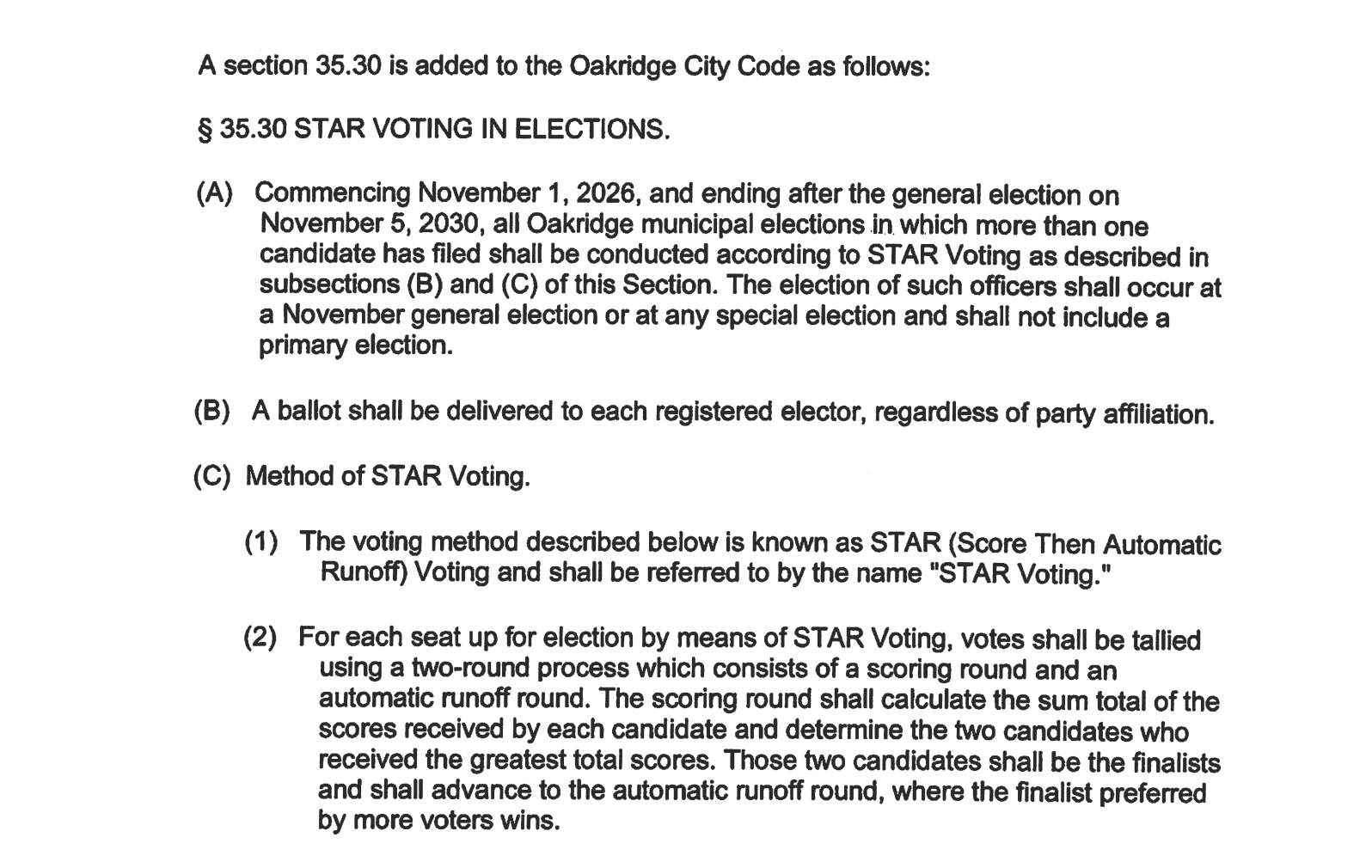
Measure 20-364 Upgrade Oakridge Elections (Nov 2024)
- Establishes STAR Voting for three election cycles before residents would vote to adopt it permanently.
- Maintains existing nonpartisan structure with a single election in November, This would not change.
- Includes a provision that pilot would go into effect after outside funding is secured so the implementation would not be paid for by the city.
|
 |
|
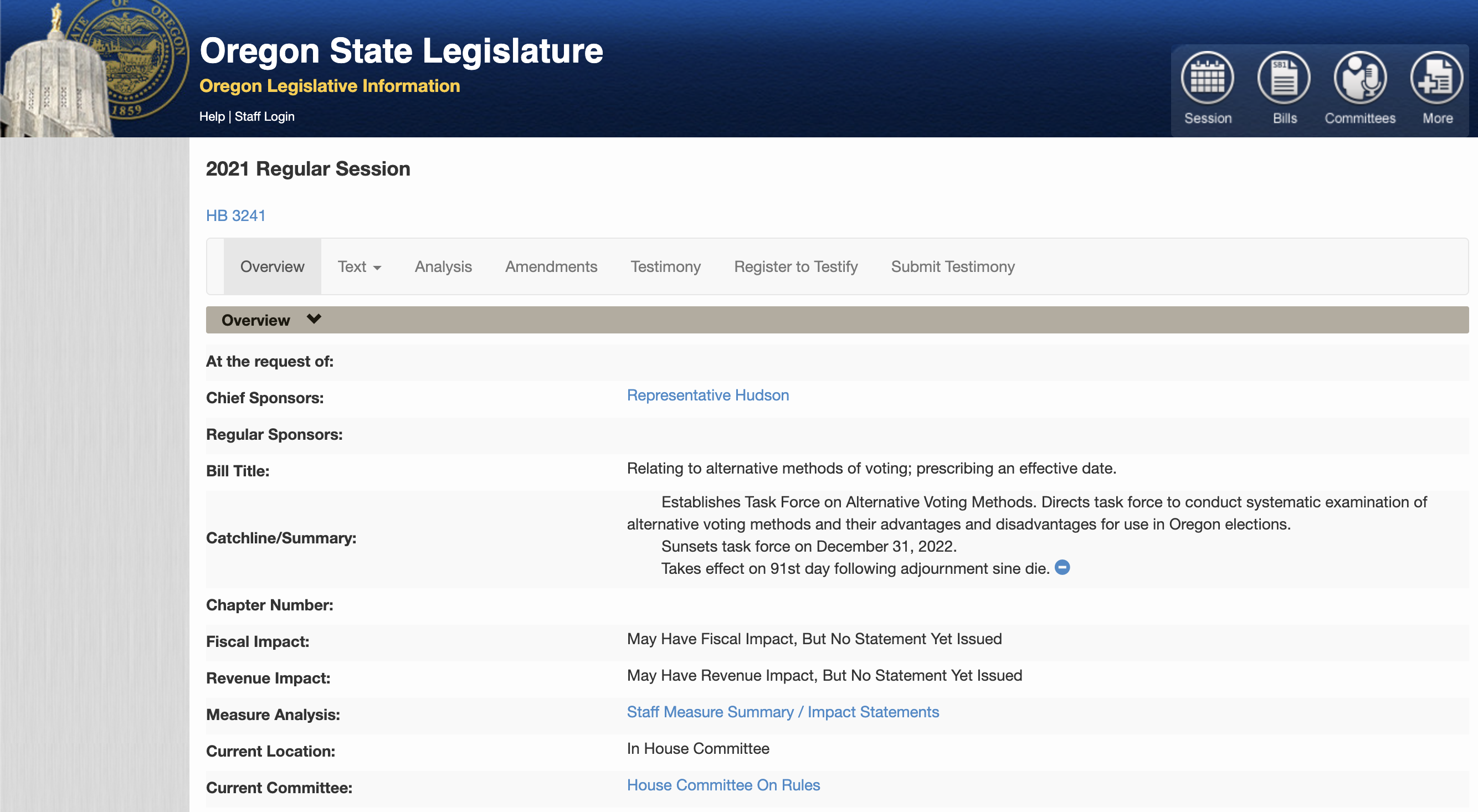
Oregon House Bill 3241 (2021):
- Establishes Task Force on Alternative Voting Methods.
- Directs task force to conduct systematic examination of alternative voting methods and their advantages and disadvantages for use in the state.
- Takes effect on 91st day following adjournment sine die. Sunsets task force on at the end of the following year.
|
 |
|
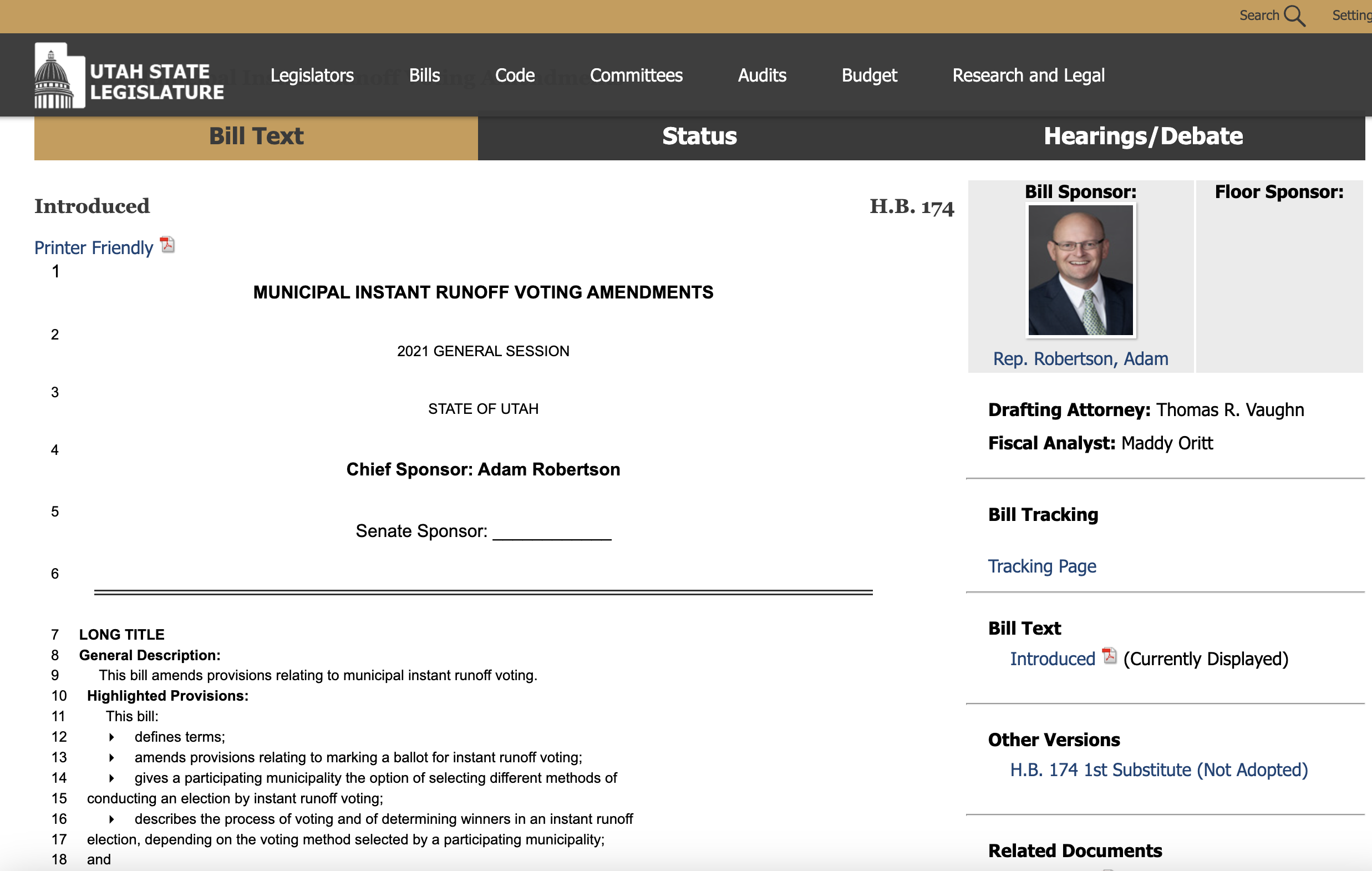
Utah House Bill 174 (2021):
- Extends previous pilot project to trial Ranked Choice (Instant Runoff) Voting to allow municipalities to trial STAR Voting or Approval Voting if desired.
- Defines STAR Voting as a type of allowed instant runoff method and describes tabulation.
|
For information<iframe src="https://cdn.flipsnack.com/widget/v2/widget.html?hash=ciwza2apma" width="100%" height="480" seamless="seamless" scrolling="no" frameBorder="0" allowFullScreen></iframe>
Learn-New-STAR
STAR Voting Legislative Templates
We should be able to vote our conscience, our votes should never be wasted, and our elections should accurately reflect the will of the people. It's not rocket science. #StarVoting
